

How Vexoriant Token Unites Gaming Economies and Metaverse Worlds
The gaming and metaverse landscape has exploded with Web3 innovation over the past few years, yet a fundamental problem persists: fragmentation. Each game creates its own isolated economy with proprietary tokens and NFTs that lose value the moment a project shuts down or players move to competing titles. This fragmentation forces gamers to constantly rebuild their digital wealth across disconnected ecosystems, creating friction that prevents mainstream adoption of blockchain gaming.
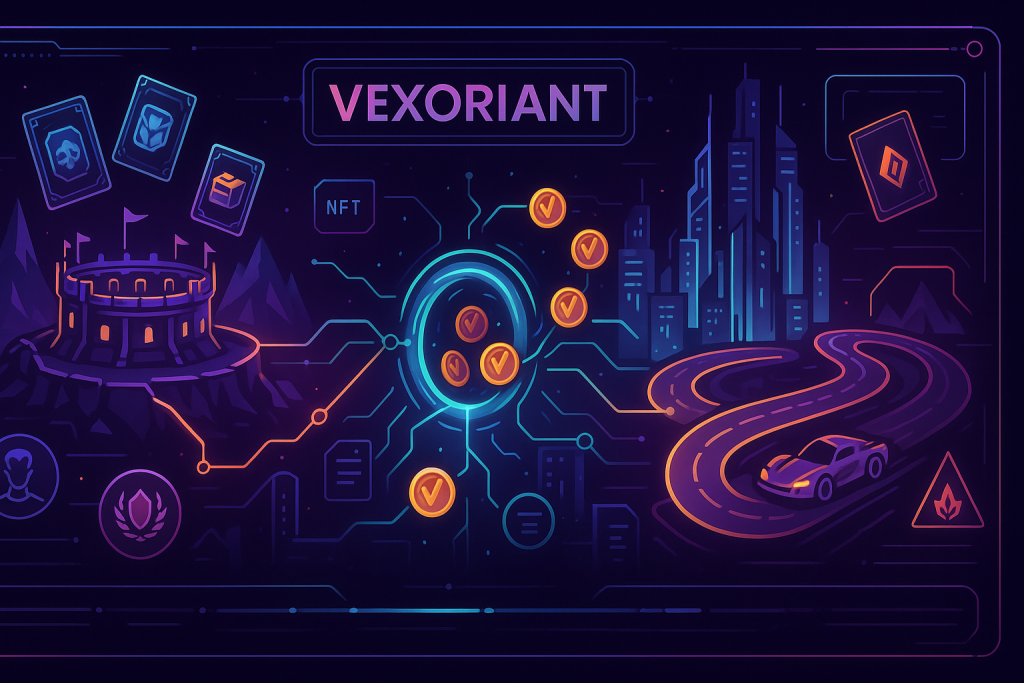
Vexoriant Token emerges as a solution to this challenge—a universal gaming currency and infrastructure layer designed to connect multiple metaverses, enable cross-game asset portability, and create lasting value for players regardless of which virtual worlds they explore. Rather than competing with individual games, Vexoriant provides the economic foundation that allows diverse gaming projects to interoperate, share liquidity, and reward players consistently across their entire Web3 gaming journey.
This article explores how Vexoriant Token works, its key features for gamers and developers, and why it represents a crucial evolution toward truly interconnected metaverse economies.
Why Web3 Gaming Needs a Shared Economic Layer
Despite the promise of blockchain gaming, current implementations suffer from critical limitations that prevent long-term sustainability. Most play-to-earn games launch their own tokens that quickly lose value after initial hype cycles. NFT assets remain trapped within single games, becoming worthless if the project fails or player interest shifts elsewhere.
This creates a paradox: blockchain should enable true digital ownership and asset portability, yet most Web3 games operate as walled gardens just like traditional gaming platforms. A player who invests hundreds of hours and dollars into one blockchain game cannot transfer that value when migrating to a new experience. Guilds struggle to manage treasuries across dozens of incompatible tokens. Independent developers face impossible barriers trying to bootstrap liquidity and establish economic credibility.
The solution requires infrastructure that operates above individual games—a shared economic layer where multiple projects can plug in while maintaining their unique gameplay. Vexoriant Token provides this foundation, enabling games to focus on creating compelling experiences while leveraging established liquidity, cross-game functionality, and network effects from a unified ecosystem.
The Origin Story of Vexoriant Token
Vexoriant Token was conceived by a team combining expertise across game design, virtual economy modeling, and blockchain infrastructure. The founding members had worked on various metaverse projects and Web3 games, repeatedly encountering the same frustration: brilliant game concepts hampered by fragmented tokenomics and lack of interoperability.
The breakthrough insight came from observing traditional gaming ecosystems. Successful platforms like Steam, PlayStation Network, and Xbox Live don’t require each game to create its own currency—they provide unified payment rails and cross-game features that benefit the entire ecosystem. Why couldn’t blockchain gaming adopt a similar model while preserving the decentralization and true ownership benefits of Web3?
Vexoriant Token was designed as the economic engine for this vision: a utility token that serves as universal currency across partner games, powers NFT bridges between virtual worlds, tracks player reputation on-chain, and distributes rewards to content creators and studios based on actual engagement and value creation. Rather than forcing games to compete for limited liquidity pools, Vexoriant creates shared infrastructure where success in one project strengthens the entire network.
What Is Vexoriant Token?
Vexoriant Token is a multi-purpose utility token serving as the foundational economic layer for an interconnected gaming and metaverse ecosystem. Unlike single-game tokens with limited utility, Vexoriant functions across multiple dimensions:
Primary Functions:
- Universal game currency: Players earn and spend Vexoriant across all integrated games, eliminating the need to acquire dozens of different tokens.
- NFT marketplace settlement: All cross-game NFT trades, upgrades, and bridge transactions utilize Vexoriant Token for payments and fees.
- Staking and governance: Token holders stake Vexoriant to participate in ecosystem governance, earn rewards from protocol fees, and unlock premium gaming features.
- Creator and studio revenue sharing: A portion of all transactions flows to a rewards pool distributed among game developers and content creators based on engagement metrics.
Technical Implementation:
Vexoriant is implemented as an ERC-20 compatible token with bridges to gaming-optimized Layer 2 networks and sidechains. This architecture ensures low transaction costs (typically under $0.01) and high throughput necessary for real-time gaming economies, while maintaining security and liquidity on major blockchains.
The token serves as infrastructure rather than a game itself—similar to how Ethereum provides infrastructure for DeFi protocols. Games retain creative control and can supplement Vexoriant with game-specific resources, but the core value exchange happens through the shared token.
Universal Game Currency: Seamless Value Transfer Across Worlds
One of Vexoriant Token‘s most powerful features is its role as a universal gaming currency that works across all ecosystem partner games. This eliminates a major pain point in current Web3 gaming: the need to constantly convert between different tokens with high slippage and transaction costs.
Here’s how it works in practice:
A player starts in a fantasy RPG where they complete quests and defeat bosses, earning Vexoriant Token as rewards. Rather than being locked into that single game’s economy, they can immediately spend those tokens in a completely different genre—perhaps purchasing land in a social metaverse, buying weapon skins in a competitive shooter, or accessing premium content in a virtual concert venue.
Each transaction generates small fees distributed across three destinations:
- The game where the spending occurs (incentivizing developers to integrate Vexoriant)
- The ecosystem rewards pool (supporting ongoing development and creator grants)
- Token stakers (rewarding long-term holders who provide liquidity and governance)
This creates a virtuous cycle where more integrated games mean more utility for Vexoriant Token, which attracts more players, which incentivizes more games to integrate. Network effects compound as the ecosystem grows, similar to how app stores become more valuable with each additional quality application.
Cross-Game NFT Bridge: True Asset Portability
While universal currency solves the liquidity fragmentation problem, Vexoriant Token also addresses asset portability through its innovative Cross-Game NFT Bridge. This system allows players to transfer NFT-based items, characters, and achievements between different games while preserving ownership and value.
The bridge works through a standardized metadata layer:
Each NFT contains core attributes (rarity, ownership history, upgrade level) stored on-chain plus game-specific rendering instructions. When a player bridges an epic sword NFT from a medieval RPG to a sci-fi shooter, the bridge doesn’t literally transfer the same visual asset—instead, the underlying value and rarity tier gets mapped to an equivalent item in the new game (perhaps an energy weapon with comparable power level).
Vexoriant Token powers this system in several ways:
- Bridge transactions require payment in Vexoriant, creating consistent demand
- NFT upgrades and customizations use Vexoriant as the primary currency
- Studios receive Vexoriant rewards when players bring valuable NFTs into their games, incentivizing broad compatibility
This approach allows games to maintain unique art styles and balance mechanics while still honoring the value players have accumulated elsewhere. A player who earns a legendary mount in one game doesn’t lose that achievement when trying a new experience—the equivalent prestige and utility transfers with them.
Player Reputation and On-Chain Identity
Beyond currency and assets, Vexoriant Token enables persistent player reputation that follows gamers across all ecosystem experiences. This on-chain identity system creates accountability and unlocks features impossible in isolated gaming economies.
The reputation system aggregates multiple signals:
- Tournament victories and competitive rankings
- Achievement completion across different games
- Community contributions and helpful behavior
- Guild leadership and collaboration success
- NFT collection and trading activity
All these metrics combine into a verifiable on-chain profile accessible to any integrated game. This serves multiple purposes:
For competitive gaming, high reputation scores can gate access to premium tournaments and leagues, reducing smurfs and ensuring fair matchmaking. Guild recruitment becomes more transparent when a player’s full gaming history is publicly verifiable.
For asset rental and lending, reputation serves as collateral. High-reputation players can borrow expensive NFTs from others for important competitions, with smart contracts enforcing returns. This creates liquidity in gaming assets similar to how rental markets function in traditional economies.
For anti-cheat and moderation, games can implement reputation-based trust systems. Accounts with consistent positive behavior across multiple games receive benefits like reduced transaction fees or early access to content, while accounts with negative patterns face restrictions.
Vexoriant Token integrates with this system through staking requirements. Players can stake tokens to boost their reputation visibility or gain access to reputation-gated features, creating additional utility demand.
Creator Rewards and Game Studio Incentives
A critical differentiator of the Vexoriant ecosystem is its emphasis on sustainable rewards for game developers and content creators. Traditional gaming platforms take 20-30% revenue cuts from studios, while blockchain alternatives often provide inadequate monetization options beyond initial NFT sales.
Vexoriant Token implements a Creator Rewards Pool funded by a portion of all ecosystem transactions. Distribution from this pool follows objective metrics:
For game studios:
- Active daily/monthly users in their game
- Player retention rates (rewarding quality experiences)
- NFT trading volume (indicating healthy in-game economies)
- Cross-game integration depth (incentivizing bridges and compatibility)
For content creators:
- NFT collections that achieve sustained popularity across multiple games
- User-generated content (maps, mods, cosmetics) that other players purchase
- Community building and social media engagement that drives new players to the ecosystem
This model creates alignment between token value and quality. Studios succeed not by launching quick cash-grab games but by building compelling long-term experiences that retain players. Creators earn ongoing royalties rather than one-time payments. The entire ecosystem benefits when individual projects excel.
Independent developers particularly benefit from this infrastructure. Instead of needing to establish token liquidity and build economic systems from scratch—massive barriers to entry—small studios can integrate Vexoriant Token and immediately access established player bases and functional economies. This dramatically lowers the threshold for innovative gaming projects to reach market.
Staking, Governance and Metaverse Hubs
Vexoriant Token incorporates decentralized governance allowing stakeholders to shape ecosystem evolution. This is particularly important in gaming, where community preferences and fair rules directly impact enjoyment and retention.
Staking mechanics:
Token holders can stake Vexoriant Token to:
- Earn a share of protocol fees generated by transactions across all games
- Increase voting power in governance decisions
- Unlock premium features like priority matchmaking or exclusive tournaments
- Participate in metaverse hub governance (explained below)
Governance decisions include:
- Approval of new games joining the ecosystem (maintaining quality standards)
- Allocation of Creator Rewards Pool funds and grant programs
- Cross-game NFT standards and compatibility requirements
- Economic parameters like fee structures and inflation schedules
The governance model prevents any single entity from controlling the ecosystem. Large gaming guilds, popular content creators, long-term token holders, and integrated game studios all have representation proportional to their stake and contribution.
Metaverse Hubs represent a unique governance innovation. These are virtual gathering spaces owned and operated by communities of stakers. Hub operators curate which games get featured, organize tournaments and events, and provide social infrastructure. In exchange, they earn a portion of transaction fees generated by players they attract to ecosystem games. This creates competition among hubs to provide the best player experience, driving continuous improvement across the network.
Token Utility and Economic Model
Vexoriant Token derives value from multiple interconnected utility mechanisms that scale with ecosystem adoption:
Core utility drivers:
- In-game purchases: Primary currency for items, upgrades, and content across all integrated games
- NFT marketplace fees: All cross-game NFT trades and bridges require Vexoriant for transaction costs
- Staking rewards: Protocol fees distributed to token stakers who provide liquidity and governance
- Reputation staking: Access to competitive features and reputation boosts require locked tokens
- Creator compensation: Studios and content creators receive payments in Vexoriant based on engagement
Economic design principles:
The tokenomics emphasize sustainable long-term value creation over short-term speculation:
- Controlled supply: Fixed maximum supply prevents inflation erosion (exact numbers subject to final governance approval)
- Balanced distribution: Allocation across ecosystem development, team vesting, early supporters, and player/creator rewards
- Fee burn mechanism: A percentage of transaction fees permanently removed from circulation, creating deflationary pressure as usage grows
- Play-and-own focus: Rewards structured around engagement and ownership rather than pure earning, avoiding ponzi-like dynamics that plague play-to-earn games
As more games integrate and player activity increases, natural demand for Vexoriant Token grows through transaction needs, staking requirements, and NFT marketplace activity. This creates organic value appreciation tied directly to ecosystem utility rather than speculation.
Real-World Use Cases: How Games and Players Benefit
Vexoriant Token enables concrete scenarios that solve real problems in current gaming:
Multi-Game Player Journey
Sarah discovers a free-to-play Web3 RPG integrated with Vexoriant. She completes tutorials and early quests, earning her first 50 Vexoriant Tokens and a starter weapon NFT. The game is fun but eventually she wants variety.
Instead of abandoning her progress, Sarah bridges her weapon NFT to a racing metaverse where it becomes a vehicle upgrade. Her accumulated Vexoriant purchases premium track access. Her on-chain reputation from RPG achievements unlocks special racing tournaments. Three months later, she’s earned 500 Vexoriant Tokens across five different games—all in a single wallet, all instantly usable wherever she plays next.
Guild Treasury Management
The Apex Legends guild operates across multiple competitive games in the Vexoriant ecosystem. Their treasury holds Vexoriant Tokens and high-value NFTs. When recruiting new members, candidates can prove their skill through verified on-chain tournament results rather than just claims. The guild uses smart contracts to automatically pay winnings in Vexoriant based on competition performance.
They stake 100,000 Vexoriant Tokens to operate a metaverse hub, earning transaction fees from players they introduce to ecosystem games. This creates sustainable funding for prize pools and recruitment without relying on external sponsors.
Independent Studio Success
A two-person development team builds an innovative puzzle game but lacks resources for expensive token launches and market making. They integrate Vexoriant Token as their primary currency, immediately accessing liquidity and an established player base.
Players who earned Vexoriant in other games can seamlessly try the new puzzle experience without friction. The studio starts earning Creator Rewards based on daily active users and retention. Within six months, their rewards pool income exceeds what a traditional publisher advance would provide—and they retain full ownership and creative control.
Risks and Challenges in Multi-Game Economies
While Vexoriant Token offers significant advantages, prospective participants should understand inherent risks:
Game quality variability: The ecosystem’s reputation depends on all integrated games meeting quality standards. Weak projects could damage player trust. Vexoriant addresses this through governance-based game approval and continuous quality monitoring, but risk remains.
Economic balancing complexity: Coordinating economies across games with different genres, player bases, and reward structures requires sophisticated modeling. Excessive inflation or deflation in Vexoriant could harm specific game types. The team implements adaptive economic parameters and circuit breakers, but perfect balance is challenging.
Regulatory uncertainty: Gaming tokens and NFTs face evolving regulations globally. Some jurisdictions may restrict play-to-earn mechanics or NFT trading. Vexoriant’s play-and-own model and compliance infrastructure mitigate risk, but regulatory changes could impact operations.
Bridge security: Cross-game asset transfers create potential attack surfaces. Smart contract vulnerabilities in bridge infrastructure could enable exploits. Multiple audits, gradual rollouts, and insurance mechanisms reduce but don’t eliminate this risk.
Network effects dependency: Vexoriant becomes exponentially more valuable as more quality games integrate. Early adoption phases carry risk that network effects may develop slower than projected. The team addresses this through selective partnership curation and developer incentive programs.
Transparent communication about these challenges builds trust. Vexoriant Token succeeds by acknowledging limitations while continuously improving systems based on real-world feedback.
Roadmap and Future Vision for Interconnected Gaming
Vexoriant Token development follows a phased approach balancing innovation with stability:
Phase 1: Foundation (Current – 6 months)
- Launch core token on primary blockchain with initial DEX liquidity
- Integrate 3-5 diverse gaming partners (RPG, social metaverse, competitive shooter)
- Deploy basic NFT bridge supporting item transfers between initial games
- Release player reputation tracking for tournament participation
Phase 2: Ecosystem Expansion (6-18 months)
- Scale to 15+ integrated games across multiple genres
- Launch Creator Rewards Pool with objective distribution metrics
- Deploy advanced governance enabling community-led proposals
- Integrate with major gaming NFT marketplaces and wallet providers
Phase 3: Metaverse Hubs (18-30 months)
- Enable community-operated metaverse hubs with customizable governance
- Implement sophisticated cross-game asset mapping for complex NFTs
- Launch mobile integration for mainstream accessibility
- Establish partnerships with traditional gaming studios exploring Web3
Phase 4: Mainstream Adoption (30+ months)
- Achieve 100+ integrated games and 1M+ active players
- Become recognized standard infrastructure for Web3 gaming economies
- Enable fiat on-ramps making Vexoriant accessible to non-crypto gamers
- Establish Vexoriant Token as the de facto universal currency across multiple major metaverses
The long-term vision positions Vexoriant not as a single gaming company but as core infrastructure—similar to how payment processors or game engines provide essential services enabling countless developers to build successful products.
How to Get Started with Vexoriant Token
Joining the Vexoriant ecosystem involves straightforward steps for different participant types:
For Players:
- Set up a Web3 wallet compatible with Vexoriant (MetaMask, Coinbase Wallet, or gaming-specific options)
- Acquire initial Vexoriant Tokens through supported exchanges or complete onboarding quests in partner games
- Connect wallet to your first Vexoriant-integrated game and begin playing
- Earn tokens through gameplay, trade NFTs in ecosystem marketplaces, and build on-chain reputation
- Explore other integrated games using the same wallet and tokens—your progress travels with you
For Game Studios and Developers:
- Review integration documentation and technical requirements for Vexoriant ecosystem participation
- Submit game proposal to community governance for approval (demonstrating quality and fit)
- Implement Vexoriant SDK for token transactions and optional NFT bridge support
- Launch with marketing support from ecosystem and access to established player base
- Earn Creator Rewards based on player engagement and retention metrics
For Content Creators and Artists:
- Create NFT collections compatible with multiple ecosystem games
- Submit work to partner games for potential integration
- Earn royalties in Vexoriant Token from secondary sales and cross-game usage
- Build reputation as creator, unlocking grants and commissioned opportunities
For Guilds and Communities:
- Consolidate treasury into Vexoriant Token for simplified multi-game management
- Stake tokens to operate metaverse hub, earning fees from player activity
- Use on-chain reputation for transparent recruitment and member evaluation
- Participate in governance shaping ecosystem rules and standards
Early participants benefit from founder incentive programs, preferential staking rewards, and governance influence as the ecosystem scales. As Web3 gaming transitions from fragmented experiments to interconnected infrastructure—a shift already accelerating across the industry—Vexoriant Token positions players, developers, and communities to thrive in this new paradigm.